


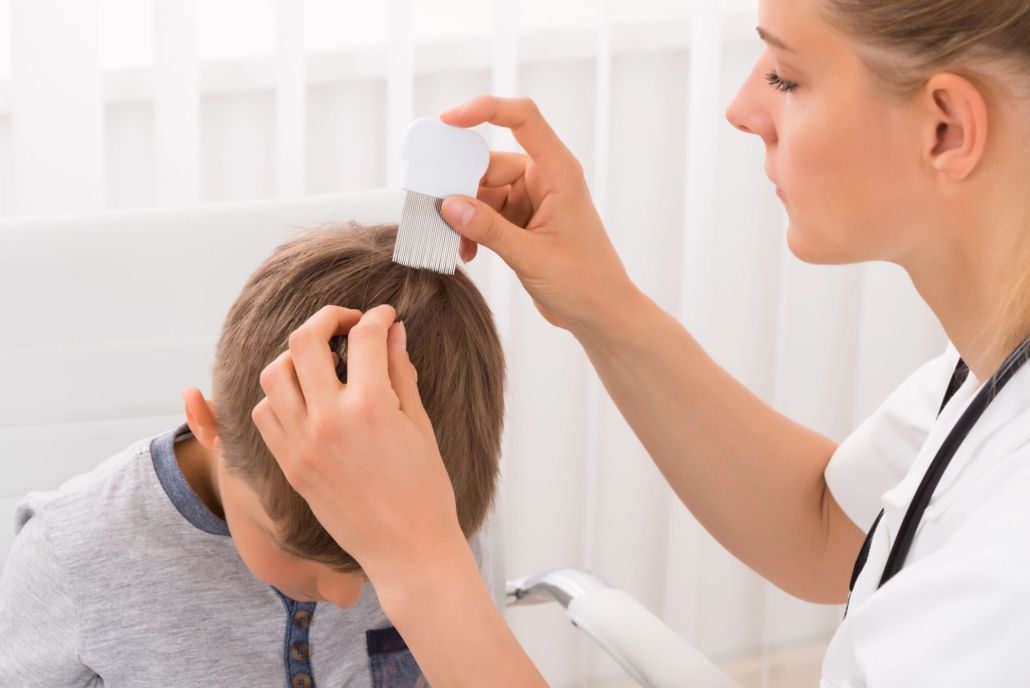
How to Check Thick or Curly Hair for Lice Without Missing Nits
If you have a child with thick or curly hair, lice checks can feel impossible. Hair density hides movement, curls disguise tiny eggs, and a quick look often misses the problem until itching gets worse or a school note shows up.
The Fastest Accurate Lice Check for Thick or Curly Hair
- Use bright direct light and a fine-tooth lice comb
- Detangle first, then split hair into 4 clipped sections
- Work in thin 1/4-inch rows so you can see the scalp
- Check behind the ears and the nape first
- Comb from the scalp to the ends, wipe the comb each pass, and inspect what comes off
- If you cannot confidently confirm what you’re seeing, book a professional check to avoid reinfestation
If you want certainty today, skip the guessing and schedule a professional lice check in Rock Hill. Call 619-771-9988 or learn about treatment options.
What you need before you start
You do not need fancy tools, but you do need the right setup.
- Bright light (a lamp aimed at the scalp works better than overhead light)
- A fine-tooth lice comb
- Regular comb or detangling brush
- Hair clips or ties for sectioning
- Conditioner or detangler (helps the comb glide and reduces breakage)
- Tissue or paper towel (to wipe the comb and inspect)
For very curly or coily hair, checking on damp hair with conditioner often works better than dry checking because it reduces snagging and makes small specks easier to spot.
Where lice and nits hide most in thick or curly hair
Stop scanning randomly. Start where lice prefer to stay because it is warmer and more protected.
Check these areas first:
- Behind the ears
- The nape of the neck (hairline)
- Crown area (especially if hair is worn in buns or ponytails)
- Part lines (where light hits the scalp)
In thick hair, lice can move deeper into dense sections. In curly hair, nits can blend into texture and product buildup. That is why you need a method, not a quick glance.
Step-by-step: a lice check that actually works
Here is the process that catches what most parents miss.
Step 1: Detangle and create a clean starting point
Detangle gently from ends to roots. If the hair is very textured, add conditioner or detangler and use a wide-tooth comb first. You are not trying to style it. You are trying to make sectioning possible.
Step 2: Section the hair like a grid
This is the difference-maker.
- Split the hair into 4 main sections (front left, front right, back left, back right)
- Clip each section
- Work one section at a time
- Within each main section, take thin rows about 1/4 inch thick
If you cannot see the scalp through the row, the row is too thick. Thick rows mean missed nits.
Step 3: Check the scalp first, then comb through
For each thin row:
- Hold the hair close to the scalp and look at the first 1 inch from the roots
- Use the lice comb from scalp to ends in one slow pass
- Wipe the comb on tissue after each pass and inspect what comes off
In dense hair, do 2 passes per row. In curly hair, go slower and keep hair damp or conditioned so the comb reaches the root area.
Step 4: Know what you are looking for
- Live lice: tiny, fast, tan to brown. They move.
- Nits (eggs): tiny, oval, glued to the hair shaft close to the scalp.
- Empty shells: can be farther from the scalp, often white or clear.
If it flicks off easily, it is usually dandruff or debris. Nits feel stuck because they are cemented to the hair.
Signs you should book a professional lice check
If any of these are true, DIY checking usually wastes time and increases reinfestation risk:
- You see something stuck near the scalp but cannot confirm what it is
- Hair is very thick, long, or tightly curled and checks take forever
- Your household has repeat exposures (school, sports, sleepovers)
- You have treated before but the problem keeps coming back
If you are unsure, a professional check is the fastest way to get a clear answer and a clear next step. Call 619-771-9988 or contact LCA York County
The nit test most people get wrong
Parents often search for white dots and assume it is lice. Thick or curly hair can hold:
- Dry scalp flakes
- Styling product buildup
- Lint from hats and hoodies
- Gel or mousse residue
A better test:
- Try sliding the speck down the hair shaft with your fingernail
- If it slides easily, it is likely debris
- If it will not budge, treat it like a nit until proven otherwise
Also check placement. Nits are usually close to the scalp, especially with an active infestation.
How often should you check after an exposure
If there is a confirmed exposure (classroom note, sleepover, close contact), check:
- Immediately
- Again in 2 to 3 days
- Again in 7 days
Lice can be missed early, especially in dense hair. A schedule beats a one-time check.
Common mistakes that cause missed lice in thick or curly hair
Avoid these and you will cut down on repeat scares:
- Checking too fast
- Using sections that are too thick
- Only checking the top layer of hair
- Checking in dim lighting
- Skipping behind the ears and nape
- Assuming no itching means no lice (itching can take time)
If you are repeatedly getting “maybe” results, stop guessing. Guessing is how lice quietly spreads through a household.
Get certainty today in Rock Hill
If you want a confident answer instead of a stressful guessing game, book a professional lice check with LCA York County in Rock Hill. You will know what you are dealing with and what to do next, without wasting days on uncertainty.
Call 619-771-9988 to schedule or book online at https://liceremovalyorkcounty.com/
